
International Academic Conference for Optoelectronics Industry
- Shenzhen, China
- September 08-11, 2026
Plenary Speakers
Plenary Speakers
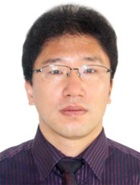
Hongbo Sun
Academician of the Chinese Academy of Sciences
Tsinghua University, China
Hong-Bo Sun received BS/PhD degrees in electronics from Jilin University, China, in 1992/1996. He worked as postdoctoral researcher at the University of Tokushima (1996-2000), assistant professor at Osaka University (2000-2006), Changjiang professor at Jilin University (2006-2017) and Tsinghua University since 2017. His research interest is ultrafast laser manufacturing. So far, he has published over 600 papers in above fields, which are cited for 45000+ times, and H factor is 102, according to ISI search report. He is CAS academician, IEEE, OSA, SPIE, COS and CSOE fellow, editor-in-chief of PhotoniX, and executive editor-in-chief of Light Science and Applications.
Speech Title: Sub-10 nm Resolution in 3D Ultrafast Laser Manufacturing
Abstract: Existing nanofabrication technologies typically require tools with nanoscale feature sizes (such as cutting edge thickness, tip dimensions, or particle beam diameters) or templates to interact directly with the workpiece to achieve nanoscale resolution. In contrast, photons, as a direct processing medium, offer unique advantages over physical tools, including flexibility and the absence of wear. However, the processing precision defined by the optical diffraction limit (approximately 550 nm for visible light) needs to be improved by an order of magnitude to meet the requirements of true nanofabrication. This report presents our research on utilizing femtosecond lasers for nonlinear manipulation of light–matter interactions, achieving three‑dimensional fabrication with sub‑10 nm resolution in additive, subtractive, and modification manufacturing. We have also made progress in photonic quantum integrated devices, such as integrated Rydberg‑atom field detectors. The technology is expected to find important applications in optical interconnects for electronic chip integration, 3D photonic integration, and quantum integrated systems. Applications spanning from intelligent micro/nano‑robots to photonic quantum integrated chips will also be introduced.

Roman Romashko
Corresponding Member of Russian Academy of Sciences
Far Eastern Branch of Russian Academy of Sciences, Russia
Roman Romashko received the M.S. degree in condensed matter physics from the Moscow Engineering Physics Institute, Moscow, Russia, in 1995, the Ph.D. degree in measurement and control systems from Far-Eastern Federal University, Russia, in 2002, and Dr.Sc. degree in laser physics from the Institute of Auto¬mation and Control Processes, Far East Branch of the Russian Academy of Sciences (IACP FEB RAS), Vladivostok, Russia, in 2011. During 2004-2009 he was a visiting researcher at the University of Eastern Finland and at the Korea Electronics Technology Institute where he worked on adaptive interferometry, and dynamic and digital holography.
Since 2004 he works at the IACP FEB RAS as senior, leading, and chief researcher, and then, in 2019, he became a director of the IACP FEB RAS. Since 2010, he is professor of the Polytechnic Institute at the Far-Eastern Federal University, Vladivostok, Russia. In 2016 he was elected as a Corresponding Member of the Russian Academy of Sciences.
His research interest includes holography and interferometry, optical measurement and sensory systems, optoelectronics, photonics, and optical information processing, biomedical imaging. He is author of more than 270 scientific papers, including 3 monographies and 13 patents.
Prof. R. Romashko is a member of IEEE and IEEE Photonics Society.
Speech Title: Adaptive Holographic Interferometry as An Ultra-High Sensitivity Tool for Precision Measurements
Abstract: A laser interferometer is a quite promising and the most accurate technique for the detection and measurement of ultra-weak physical quantities on the pico- and even femtometer scale. However, owing to their high sensitivity, interferometric systems become open to the influence of the environment, which is usually quite unstable (due to temperature drift, accidental mechanical impacts, etc.) As a result, it becomes very difficult or even impossible to use the interferometer outside a laboratory for measurements. In turn, the use of dynamic holograms continuously recorded in a photorefractive crystal can make the interferometric measurement systems adaptive to slow temporal changes in the environment, providing their stable operation.
The report presents a review of recent achievements at IACP FEB RAS in the development of adaptive interferometry techniques based on dynamic photorefractive holography. Novel approaches for building fast and efficient adaptive interferometers, as well as multichannel adaptive holographic measurement systems with up to 10,000 channels, are proposed, developed, and studied. Experimental results of the practical use of advanced adaptive interferometry techniques for nanometrology, biosensing, NDT, acoustic measurements, and other applications are presented and discussed.

Qionghua Wang
Beihang University, China
Qiong-Hua Wang is currently a professor of optics at Beihang University. She was a professor at Sichuan University from 2004 to 2018. She was a research scientist at the School of Optics/CREOL, the University of Central Florida from 2001 to 2004. She was a faculty member at the University of Electronic Science and Technology of China (UESTC) from 1995 to 2001. She received B. S., M. S. and Ph. D. degrees from UESTC in 1992, 1995 and 2001, respectively. She has authored over 400 peer-reviewed papers indexed in the Science Citation Index and three books, and holds approximately 200 U.S. and Chinese patents. She is a Fellow of SID, OPTICA, SPIE, COS and CSOE, and also serves on the editorial board or as an associate editor for journals including Photonix and the Journal of the Society for Information Display. Her research interests include display and imaging technologies.
Speech Title: High-performance Light Field 3D Display
Abstract: 3D display technology plays a vital role in the information era. Unlike conventional stereoscopic displays, light field 3D display eliminates the issue of visual fatigue, making it a particularly promising candidate in the field. This talk provides a comprehensive overview of light field 3D display, and introduces in detail two systems developed by our team: a desktop light field 3D display and a high-resolution light field 3D display. The former delivers impressive 3D performance with a full 360° horizontal viewing angle, while the latter achieves exceptional image quality with enhanced resolution. We will elaborate on the system architecture, operational principles, and performance characteristics of both displays. In addition, I will briefly present our other ongoing research, including holographic 3D displays with wide viewing angles, electrowetting liquid lenses, and a continuous optical zoom microscope based on liquid lens.